Most guitar players and collectors have been afflicted by the incurable disease of Guitar Acquisition Syndrome, or GAS. No matter how good the instruments in our possession are, we have an insatiable hunger for something better, be it a holy grail of tone, a rare combination of woods, the work of a legendary builder, or an historic instrument from a favorite brand. For many of us, certainly for me, this longing lives in the uncomfortable land between unquenchable and unaffordable.
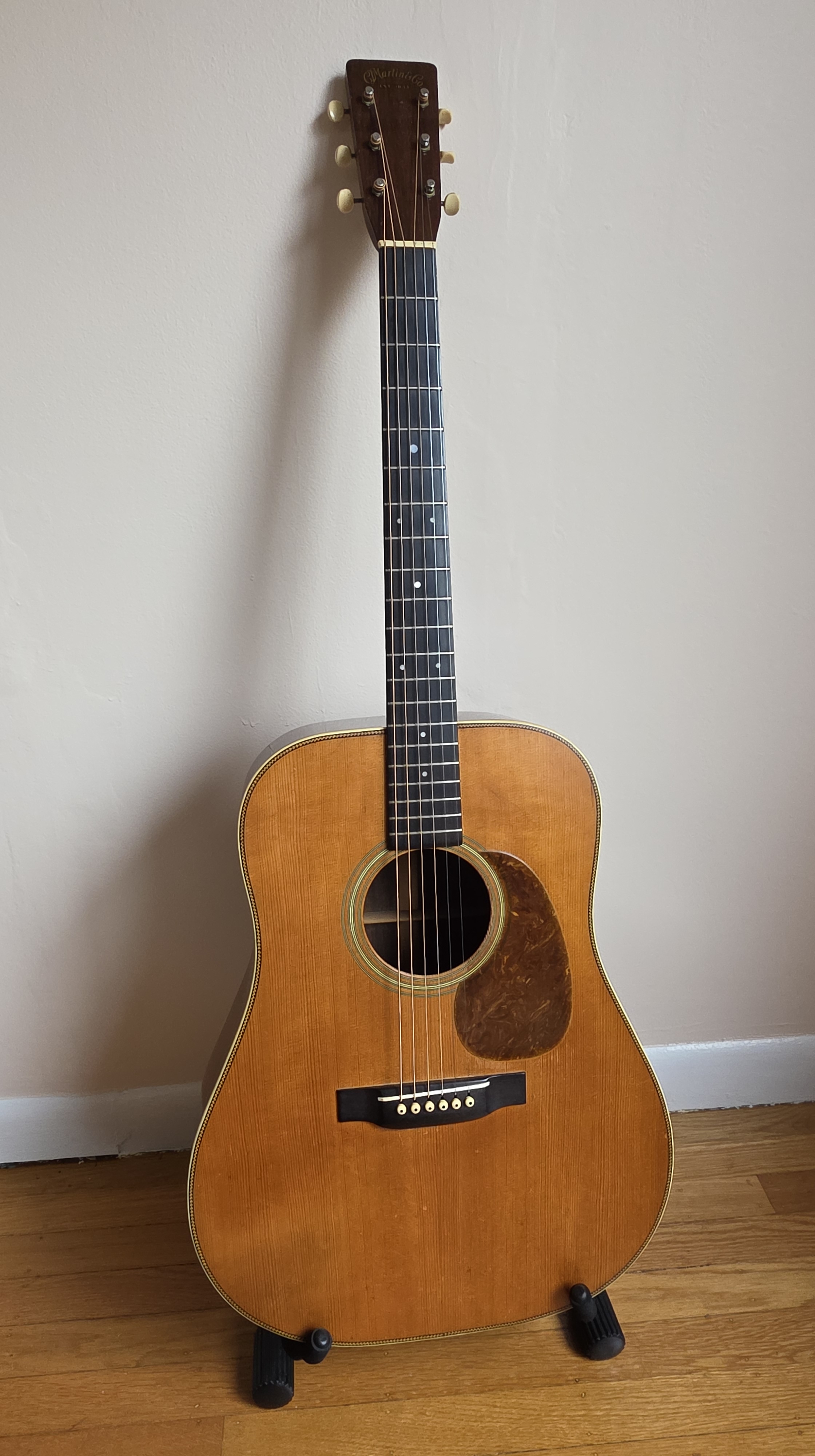
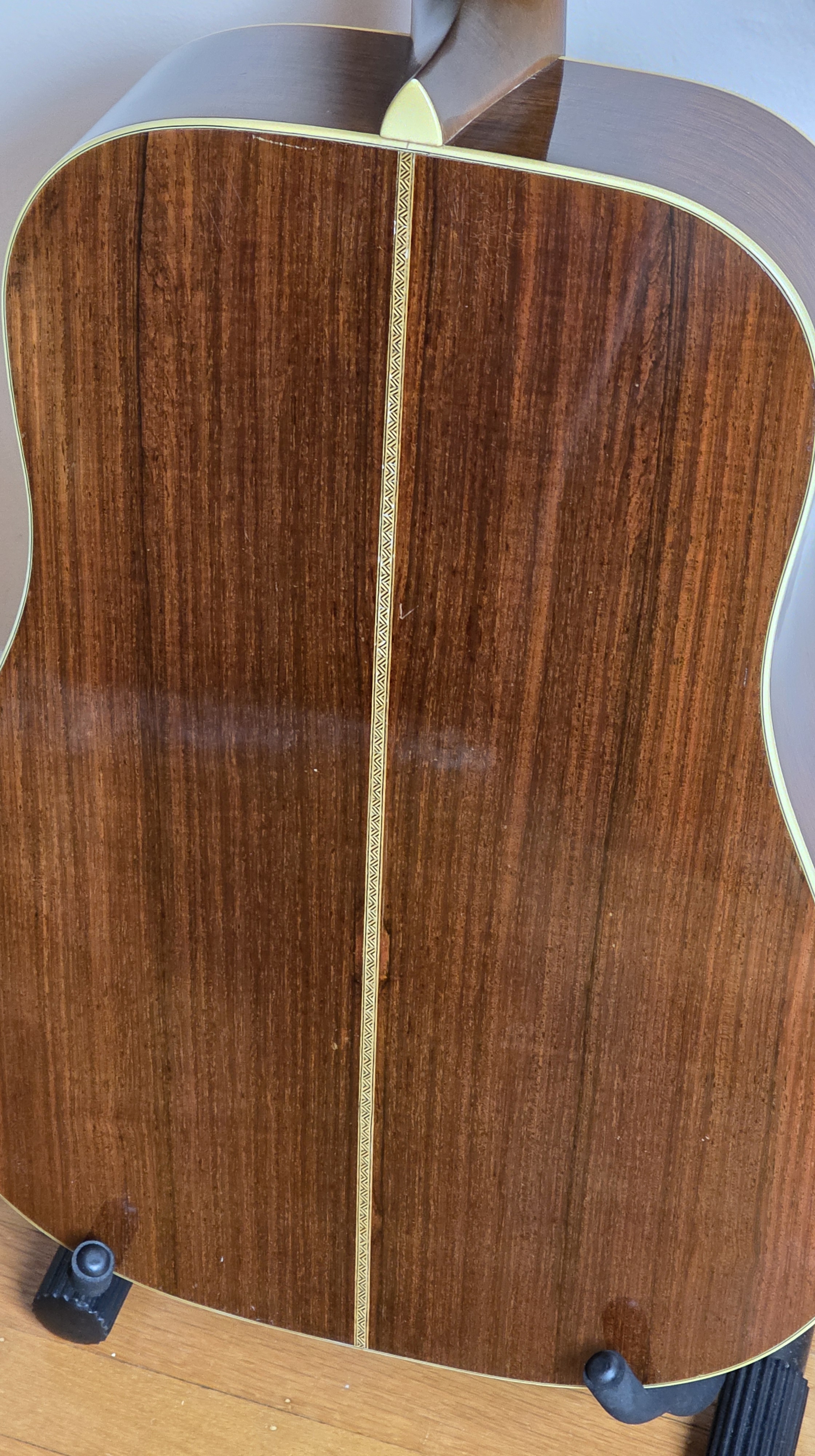
So, how is it that a 1944 Martin D-28, a Wartime wonder of perfect wood (straight-grained Brazilian Rosewood and Adirondack Spruce) and symphonic tone, was on a stand in my office, beckoning me to play it again?
Truth be told, it’s an instrument so far beyond my ability that it’s laughable. I literally can’t pick it without giggling.
My modest collection includes a 2001 Martin 12-fret 000 and a rosewood OM I built last year in partnership with a luthier. They are both lovely sounding instruments, as fellow players and audience members regularly tell me. But compared to this D-28 they might as well be cigar box guitars.
What was a fellow like me doing in (temporary!) possession of a guitar currently selling for more than I made in annual salary most of my 35 years working in human services?
Every February, the magazine Fretboard Journal collaborates with the Wintergrass Music Festival to present the Vintage Instrument Tasting Workshop. This event, a highlight of the four-day festival, features some of contemporary acoustic music’s top players demonstrating guitars and mandolins from the 1840s to the 1940s, ranging from Lloyd Loar F-5 mandolins to Regal super jumbo guitars, a James Ashborn 1848 parlor to, you got it, this 1944 Martin D-28.
The roster of instruments is curated by Mark Demaray and Bill Clements of the Wintergrass Board of Directors. Donations come from collectors and players across the country and, sometimes, from stores in Western Washington.
The D-28 was a loaner from Mike & Mike’s Guitar Bar in Seattle’s Fremont neighborhood, where it is on consignment and available to you (tinyurl.com/Buy44D28).
Its historical significance is described on the store’s website (full disclosure, while my name is Mike I have, unfortunately, no affiliation with the store):
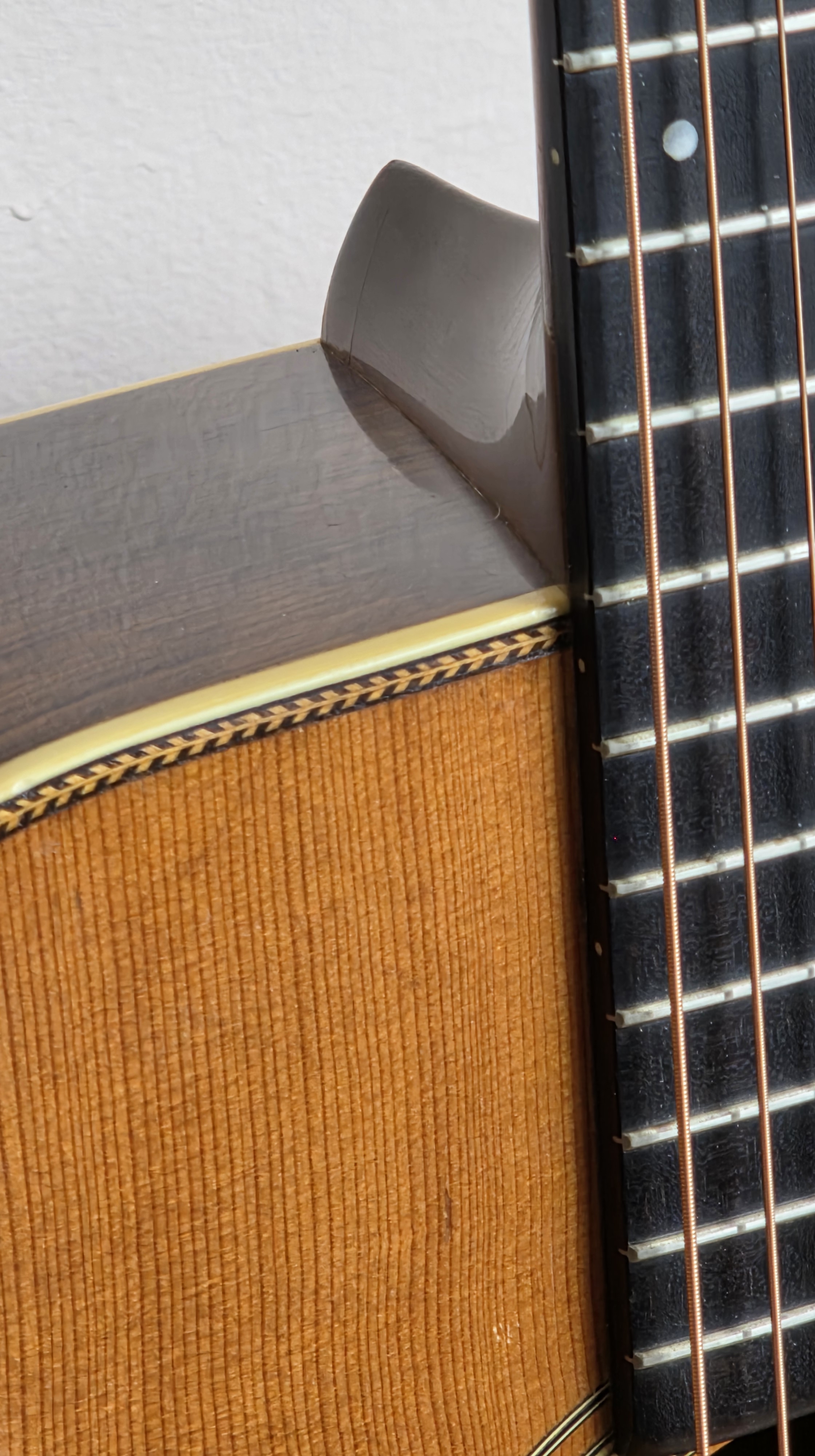
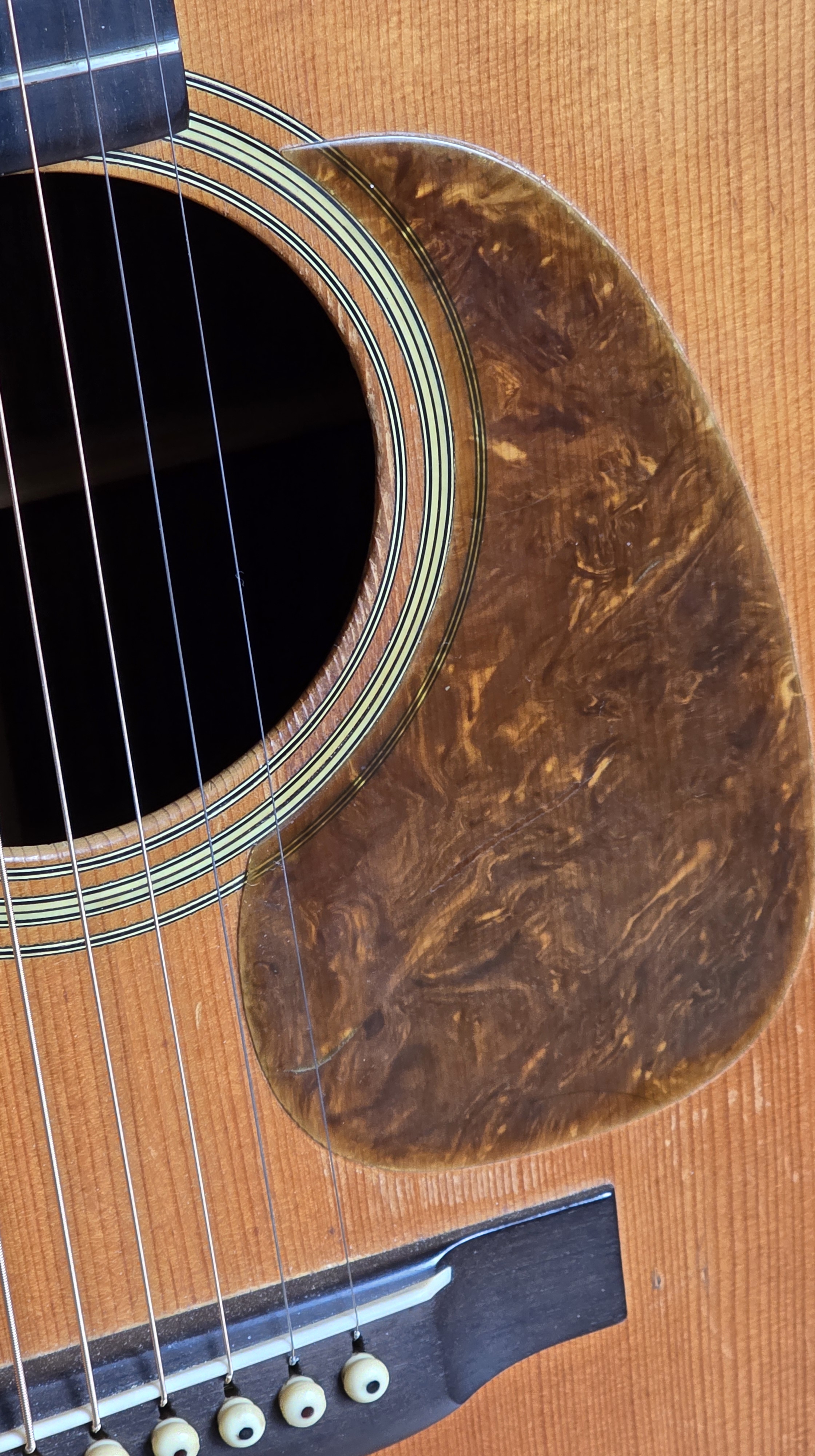
“An exceedingly well-kept Wartime Martin with sparingly few repairs and a limited service history, this genuine vintage herringbone D-28 has the transitional feature set consistent with late ’44 production including tapered X-bracing on the Adirondack spruce top, ebony neck reinforcement, and one of the first ebony fingerboards on a D-28 to feature dot inlay (a shift from the notched diamond inlays seen earlier in the year).”
Wintergrass needed someone to get the guitar from the store to the festival in time for Friday’s Tasting and return it to the store when they open on Tuesday. The Fretboard Journal’s publisher was out of town on Friday, and I was lucky enough to be asked to play courier (I am a very part time FJ worker and sometimes writer). I wrote this little piece on the Monday after the event, so guess what I was doing all day? Hint, my callouses were worn out.
And my nerves a little frayed. I was volunteering all weekend at the festival, and the guitar was in my house, alone, for much of that time. Sitting at Wintergrass on Saturday, it was all I could do not to imagine the break-in, the difficult phone calls to my insurance agent and to Mike & Mike’s, the shame I would feel. Why didn’t I handcuff it myself?
History aside and forgetting the fact that for an 82-year-old this thing is in stellar condition, what did it sound like?
I expected a boomy bass response befitting the appellation “a cannon” we often hear applied to vintage dreads. Nope. The low end was sweet and focused, the notes had a rounded bloom, like an organ’s pedal tones, with incredible resonance and natural reverb. The trebles were the real highlight. You could chime a note, go get a kombucha from the fridge, and come back to the sweet ringing tails of tone hanging in the room like contrails from a jet. Chords sounded like a choir, each note distinct but vibrating with the others. A D-28 is perhaps best known as a bluegrass guitar, so often flatpicked at 120 beats per minute or more. But played slowly, the projection and tone of this beauty really shined, making a modest rehearsal room sound like a cathedral.
Here’s a little taste of the tone, please forgive the mediocre picking and listen to the notes bloom. Recorded sans any effects via an AT 2035 mic, through a Focusrite Scarlet into Ableton: https://tinyurl.com/Martin1944D28.
I love to visit guitar stores and sample the wares. I usually leave a little jealous of some box or another, but mostly happy for the guitars waiting for me at home. I could never afford this D-28 and said goodbye to it after my long weekend. But it will forever be
lodged in my memory, the supermodel that deigned to spend the weekend with me, a queen of tone whose voice I will never forget.
 Mike Buchman Music